By-the-glass pairing
Match floral, roasted, fresh or full-bodied tea to one course or a short tasting progression.
Restaurant & Dining
Develop Chinese tea pairings, alcohol-free service and after-dinner tea around the food, pace, preparation and point of view of the restaurant.
Pairing Paths
Tea can support the food, replace an alcoholic course, reset the palate or create a memorable ending. Each role needs a different selection and serve.
Match floral, roasted, fresh or full-bodied tea to one course or a short tasting progression.
Build hot, chilled or sparkling tea serves with enough structure and presentation to stand beside wine service.
Create a concise finish around aroma, digestion-friendly pacing and tableside or pre-batched preparation.
Tea Directions
The exact pairings must be tested with the food, but these directions provide a practical starting range.
Floral lift and a clean finish for lighter dishes, chilled service and aromatic alcohol-free drinks.
Review Jasmine Green Tea →Roasted depth and structure for savoury dishes, richer courses and contemplative after-dinner service.
Review Da Hong Pao →Body and familiarity for breakfast, dessert, milk service and dishes needing a stronger tea presence.
Review Black Tea →A Focused First Project
One course or one after-dinner moment is enough to test whether tea adds contrast, refreshment or depth—and whether the service feels natural at the table.
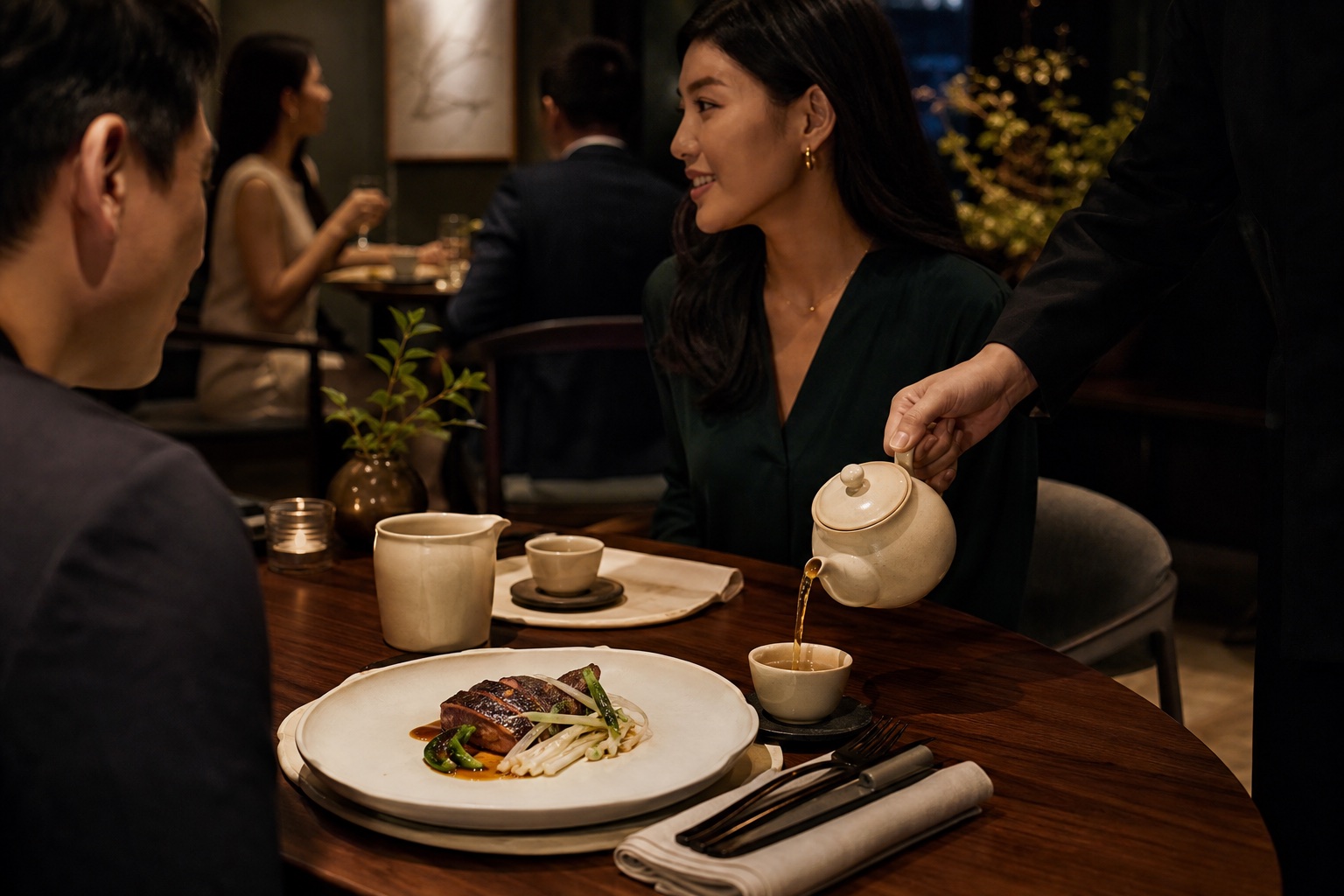
Share the dish, key ingredients, serving temperature, course timing, guest price point and whether the tea should complement, cut richness, replace alcohol or create the final aromatic note.
Test contrasting tea styles at controlled strength, temperature and serving volume. Review how aroma, body, bitterness, sweetness and finish change after each bite, then include preparation and table timing.
Confirm the tea, recipe, serve size, vessel, staff cue, guest description, pack format and expected covers before the pairing enters the menu or tasting progression.
Development Path
The restaurant team keeps final creative control. We help narrow the tea directions and make the service practical enough to repeat.
Identify priority courses, the intended tea role, guest price point and current equipment.
Select contrasting tea directions and a brewing method suited to the desired service.
Test temperature, strength, volume and timing beside the actual dish—not in isolation.
Confirm tea, recipe, presentation, staff cue, pack size and the opening supply plan.
Start With the Menu
Send the cuisine, priority courses, preferred service format and expected covers. We will propose the clearest first pairing test.