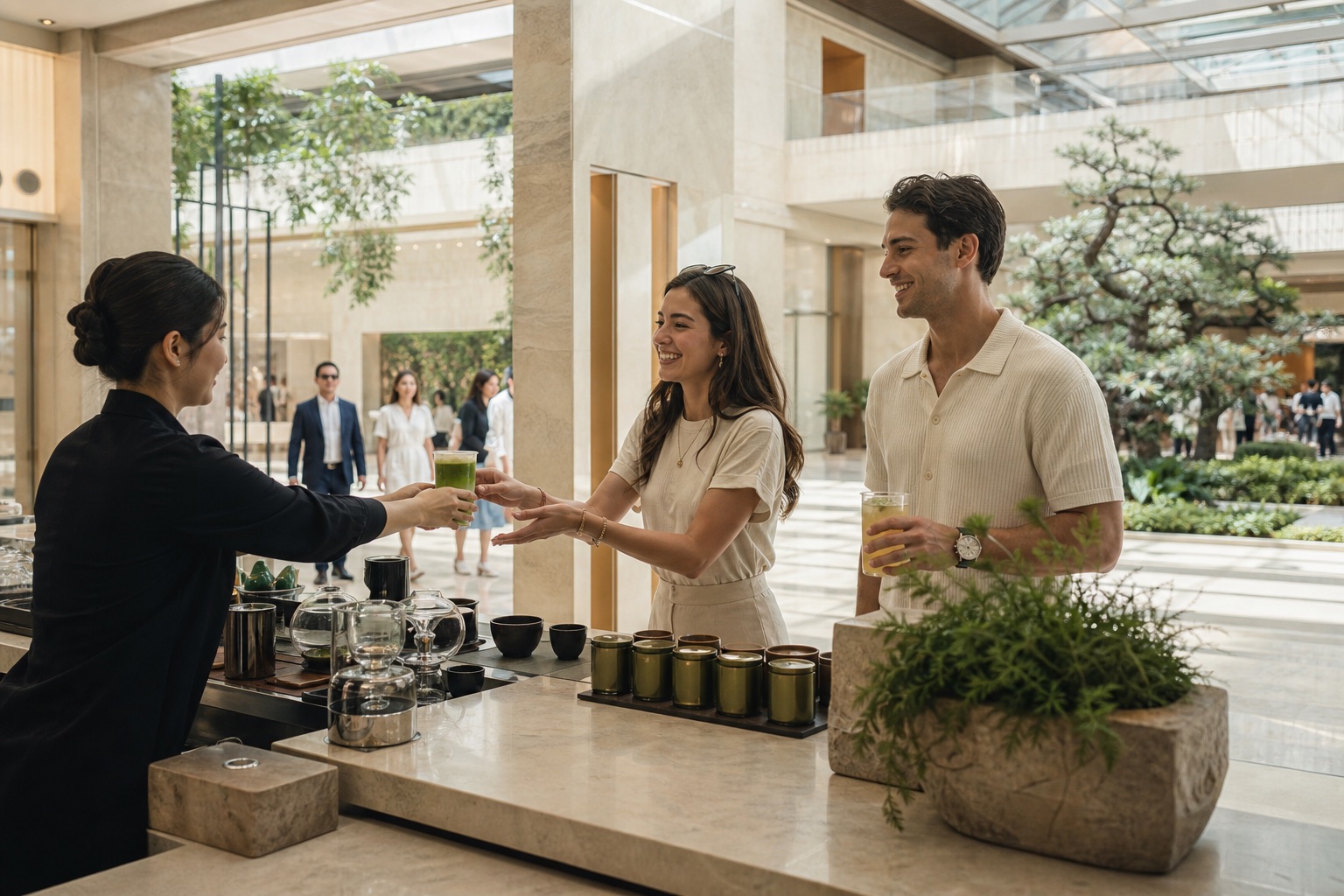
Tea-drink counter
Use a concise drinks menu to demonstrate matcha, jasmine or black tea before customers explore packaged products.
Premium Retail & Pop-Ups
Develop a modern tea bar, tasting pop-up or retail range that connects immediate trial with a clear product story, packaging and next purchase.
Retail Formats
High-traffic retail needs fast understanding. The range, tasting method and packaging should help customers move from curiosity to purchase without a long explanation.
Use a concise drinks menu to demonstrate matcha, jasmine or black tea before customers explore packaged products.
Create a short guided tasting with simple comparison points, visible preparation and products ready to take home.
Build an understandable assortment across daily drinking, premium origin tea and gifting without duplicating roles.
Product Architecture
A non-symmetrical range is easier to discover: one visible hero product, supporting everyday teas and a smaller premium or gifting layer.
A visual, demonstrable product for drinks, tasting and premium powder retail.
Review Chinese Matcha →Familiar flavor directions that work across cold drinks, daily tea and approachable retail packs.
Review Core Products →Longjing, Da Hong Pao and personalised gifting for higher-consideration purchases and occasions.
Explore Tea Gifts →A Focused First Project
A strong pilot does not need a large assortment. It needs a visible hero, an easy trial moment and packaging that lets the customer recognise what they just enjoyed.
Define the traffic pattern, dwell time, tasting format, intended price band and the first purchase customers should make. A matcha drink, jasmine cold brew or short tea tasting can lead the experience.
Review whether customers can see the preparation, understand the flavor quickly, connect the serve to the packaged tea and distinguish the hero from supporting everyday and premium products.
Confirm the hero product, supporting assortment, pack sizes, display order, sampling language, opening stock and the sales signals that will guide the first range review.
Development Path
Start with the selling environment and intended customer action, then make the product, packaging and tasting experience support that action.
Define traffic, dwell time, tasting opportunity, price bands and what the customer should buy first.
Select hero, everyday and premium products with clear roles and minimal internal competition.
Review drink, tasting, product explanation and packaging together in the intended retail environment.
Confirm opening quantities, pack formats, display priorities, replenishment and the next assortment review.
Start With the Customer Journey
Share the retail setting, target customer, price position and preferred formats. We will help define the smallest useful first range to test.